Colour has an enormous psychological effect on all of us, sometimes in an obvious way, but often in subtle ways we don’t even notice. Some colours are distinctly associated with a particular historical period, evoking a definite sense of time or place.
Just as with movie soundtracks, cinematographers manipulate colour as a way of setting the mood of a film in an almost subliminal way. It can be used to create harmony, or tension, establishing a mood or a theme. There is an online project, called Cinema Palettes, where the colour palettes of some of the most iconic films have been picked from a single image and arranged into groups of ten shades. This way of using an image as the basis for a colour scheme allows you to see how colours work together without the need for a mood board. Whether you love sumptuous period dramas or prefer Scandi Noir, consider how easy it would be to take this idea to create an instant colour scheme to use as the foundation of your interior.
As a child, I was fascinated by the absolute contrast in my grandparents’ taste. Their homes could not have been more different; one pair lived in a large, traditional red-brick house filled with dark wood, heavy furniture and endless clutter, whilst the others lived in a modern white minimalist bungalow with enormous picture windows. I loved both, and each reflected its inhabitants perfectly. Just by thinking of the colours used in each home, I can be transported back to both of these interiors.
The first had an old-fashioned air, a definite pre-war atmosphere. Granny was not a woman of fashion, although she was completely ahead of her time because she reused absolutely everything. The colours were most likely to have been from the first range of British standardised paints, some of which were developed during WWI. There is an archived Farrow & Ball colour, simply called No. 9817, so old it has no name, which matches the strong saturated green they’d used on the exterior alongside a brilliant, sunshine yellow similar to Babouche. Inside, there were more approachable colours; even though paler, they were still quite strong but all with a good dose of brown. A buttery yellow nor dissimilar to Dayroom Yellow, what we might think of as a typically vintage ‘Germolene’ pink and Green Blue, with a rich cream like Farrow’s cream on the trim. I cannot remember them ever redecorating.
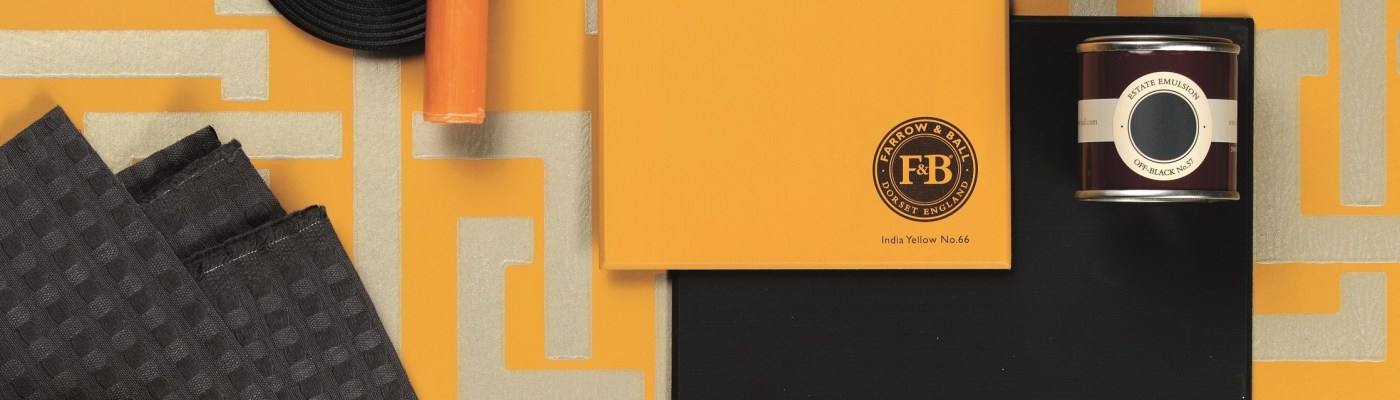
My other grandparents were much more modern in every sense. This grandmother was always redecorating, changing the curtains, even mixing her own particular shade of blue for her kitchen walls. I remember vast curtains that could completely envelope me in glamorous satin damask, with a sofa in something similar to India Yellow. As a child, what I loved best was that each one of the kitchen cupboard doors was a painted a different playful, primary colour. These never changed and if I were to recreate that kitchen now I would use Rectory Red, Charlotte’s Locks, Citron, Yeabridge Green, St. Giles and Pitch Blue. Theirs was what we now know as Mid-Century Modern, clean and uncluttered without unnecessary ornamentation. At the time, they were just cool.
 Annabelle Hunt Colour Consultant